The Secret Christmas Fuel Crisis: Ham, Halyards, and Hard Lessons in Luperon
Christmas on a sailboat is usually sold as a postcard: white sand, a cold drink, and maybe a Santa hat on a tropical fish. But the reality of life aboard SV Agua Azul is that the ocean doesn’t care about your holiday calendar. This year in Luperon, Dominican Republic, we went from carving an 8-day cured smoked ham to rigging a “battlefield extraction” for a 30-gallon fuel tank in less time than it takes to open a present.

If you’re a cruiser, you know Luperon is a legendary hurricane hole. It’s the place you go to hide from the Atlantic’s teeth. But what the cruising guides don’t tell you is that the holidays here are a high-stakes game of “will my engine start when it’s time to leave?”
The “Secret” Christmas Vibe
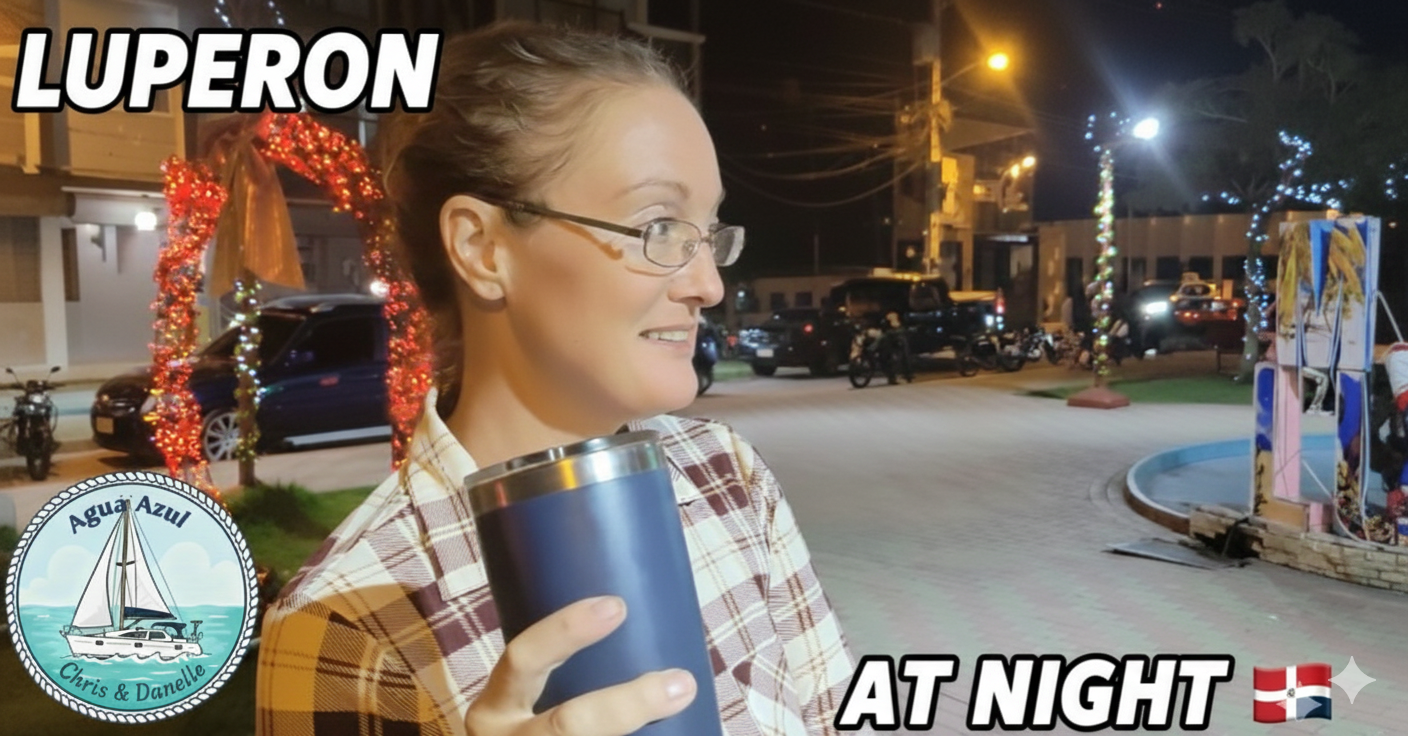
Luperon during the holidays is a vibe you can’t find anywhere else. We started the festivities at Amsterdam Pizza—a local staple—surrounded by holiday lights that make the dusty streets feel like a winter wonderland (minus the snow). It’s that rare moment in the cruising life where the “go-go-go” mentality slows down, and you actually get to know the people anchored 100 yards away.
The real star of the show, though, was the “Secret Meat Delivery.” In a bay where you’re often hunting for quality proteins, finding an 8-day cured smoked ham felt like winning the lottery. We’re talking about flavor that would make a five-star chef weep. While we didn’t have a specific holiday dessert on the menu this time, Danielle was busy in the galley perfecting her latest tiny-kitchen creations. If you’re looking for how we manage to eat like royalty in a 10-foot galley, check out the Ho Maid Chef series at www.chrisdoeswhat.com/dining-in-with-danielle/.
When the “Butt Pucker” Factor Hits 3/5
Our friend Scott had a problem. Not a “my lightbulb is out” problem, but a “my boat is a 20-ton paperweight” problem. In Luperon, contaminated fuel is the monster under every sailor’s bed. The local supply can be hit or miss, and sediment in the bottom of old tanks is a ticking time bomb. It’s not a matter of if you’ll get a bad batch; it’s a matter of how your system handles it when you do.
Scott discovered that his fuel hose wasn’t reaching the supply. After some troubleshooting, we realized the only way to fix the geometry and clean the system was a total extraction. We had to pull a massive, 30-gallon metal fuel tank out of a hole it was never meant to leave.
In a professional boatyard in the States, you’d use a gantry crane and a crew of four. In Luperon, you use your friends, your main halyard, and every bit of “Agua Azul Engineering” you can muster. This is where my Army Veteran brain takes over. We don’t see a “broken boat”; we see a mission.
The PACE Plan for Tank Extraction
When you’re staring at a 30-gallon tank full of heavy diesel, you don’t just “lift with your legs.” You need a PACE plan (Primary, Alternate, Contingency, Emergency) to ensure no one gets hurt and no fiberglass gets smashed.
- P (Primary): Use the main halyard as a vertical hoist.
- A (Alternate): Manual lift with a 3-man “bucket brigade” (high risk for the back and the gelcoat).
- C (Contingency): Block and tackle rigged to the boom to swing the load outboard.
- E (Emergency): Abandon the extraction and wait for a tow—which, in the DR, isn’t really an option.
We committed to the Primary. This meant stripping the bimini—a massive, time-consuming pain in the neck—to get a clear line of sight for a vertical pull. Using my own boat’s rigging, we created a makeshift crane.
The Extraction: Teamwork on the Catamaran
Pulling a fuel tank on a catamaran is a unique challenge. Unlike a monohull where you’re fighting gravity in a narrow companionway, we were working right in the heart of the boat: the cockpit floor. The tank was buried beneath the deck, and the only way out was straight up.
We rigged the main halyard to act as our primary lift. I worked alongside Scott, getting hands-on with the greasy reality of marine diesel. We led the halyard to the primary winch located right there in the cockpit. This gave us the mechanical advantage we needed, but it also meant we were working in tight quarters with a lot of tension on the lines.
Watching that heavy, slippery, diesel-slicked metal tank begin to hover is a 3/5 Butt Pucker moment. If that halyard snaps or the knot slips while we’re leaning over the opening, you’re looking at structural damage and a potential medical emergency in a foreign port.
There’s a specific sound a winch makes when it’s under a real load—a rhythmic, metallic clicking that tells you exactly how hard the gear is working. We moved inch by inch, coordinating our movements like a tactical team. You hear the lines creaking and stretching just enough to make your heart skip. Every eye in the bay seemed to be on us. When that tank finally cleared the deck level and sat safely on the cockpit floor, the collective sigh of relief was louder than the local roosters.
The “Teeter Test” and the Fleet’s Fear
The tank pull was a success, but the “Secret Christmas” crisis isn’t over. We’re currently seeing a wave of fuel failures across the fleet as people prepare for the next leg of the journey. This brings us to the “Teeter Test.”
The Teeter Test is when you intentionally rock the boat or run the engine under a heavy load at the dock to see if the sediment at the bottom of your tank clogs your filters. It’s the ultimate stress test. With the weather window for Puerto Rico opening up next week, everyone is running their engines and checking their Racor filters. If you see that dreaded black sludge, you aren’t going anywhere.
Why We Do It: The Veteran Connection
You might ask why we spend our Christmas covered in diesel and grease instead of sitting on a beach. The answer is simple: The Community. In the Army, you never leave a man behind. In the sailing world, you never leave a boat stranded. Helping Scott wasn’t a chore; it was the “Secret” ingredient to our holiday. It’s the bond formed over a shared halyard and a job well done. That’s the real Christmas spirit in the cruising community.
Tactical Advice for Cruisers (The Debrief)
If you’re planning on cruising the Dominican Republic, here is my debrief:
- Fuel Polishing: Don’t wait for a failure. Polish your fuel the second you drop anchor in Luperon.
- Mechanical Sympathy: Listen to your engine. If it sounds “off” or your RPMs are surging, your filters are likely choking.
- Rigging Knowledge: Your halyards aren’t just for sails. Know the load limits of your gear before you try to use it as a crane.
Luperon has been an incredible host, but as we look toward the Mona Passage and Puerto Rico, the stakes are getting higher. Episode 99 was a reminder that the ocean requires constant vigilance, even when there’s smoked ham on the table.
⚓ Join the Journey & Support the Adventure
🌟 Get Exclusive Early Access
Want to see our adventures before anyone else? Become a YouTube Member today for early content and behind-the-scenes access!
📍 Where Are We Now?
Track our live progress and see where the wind takes us!
Follow our boat on NOFOREIGNLAND
🛒 Support Our Content (At No Extra Cost!)
Every time you shop through our Amazon Affiliate Link, you help keep the boat moving and the videos coming. We truly appreciate your support!
📱 Let’s Get Social
Follow us for daily updates, boat life tips, and Danielle’s latest recipes:
- Facebook: Chris Does What
- Instagram: @ChrisDoesWhat | @DiningInWithDanielle
- Pinterest: Chris & Danielle
💎 For Content Creators
Turn your passion into profit! We use Ezoic to power our website revenue.