THE $400 SHOP GAP: Why a DIY Exhaust Install Beats the Mechanic
If you take your Jeep to a local muffler shop for a full cat-back system, you’re looking at a $400+ bill for labor and marked-up parts. In this technical breakdown, we’re cutting that cost down to the price of parts and a Saturday afternoon. We’re swapping out a rusted factory unit for a Total Flow Two-Stage Muffler and a Walker (Wagner) tailpipe to see if a budget-friendly DIY setup can deliver a professional tone.
The Technical Tool Kit
To replicate this install and avoid the fitting issues we encountered, you’ll need the following “Source Truth” components:
- Muffler: TOTALFLOW Two-Chamber Universal Muffler
- Tailpipe: Walker 43782 Exhaust Pipe
- Clamps: SPEEDWOW 2.25″ Butt Joint Exhaust Band Clamp (Essential for bridging gaps)
- Hardware: Walker 35460 Hardware Insulator
The Step-by-Step Walkthrough
1. Identifying the Root Cause
The factory exhaust was a rusted mess, providing zero backpressure and sounding like a beat-up tractor. We stripped it down to the catalytic converter to start with a clean technical baseline.
2. The Straight Pipe Logic
Before installing the muffler, we tested a straight pipe setup using only the Walker extension. The result? “Pretty darn loud.” Unless you’re strictly trailing, the straight pipe is too aggressive for a daily driver.
3. The Fitting Gap Issue
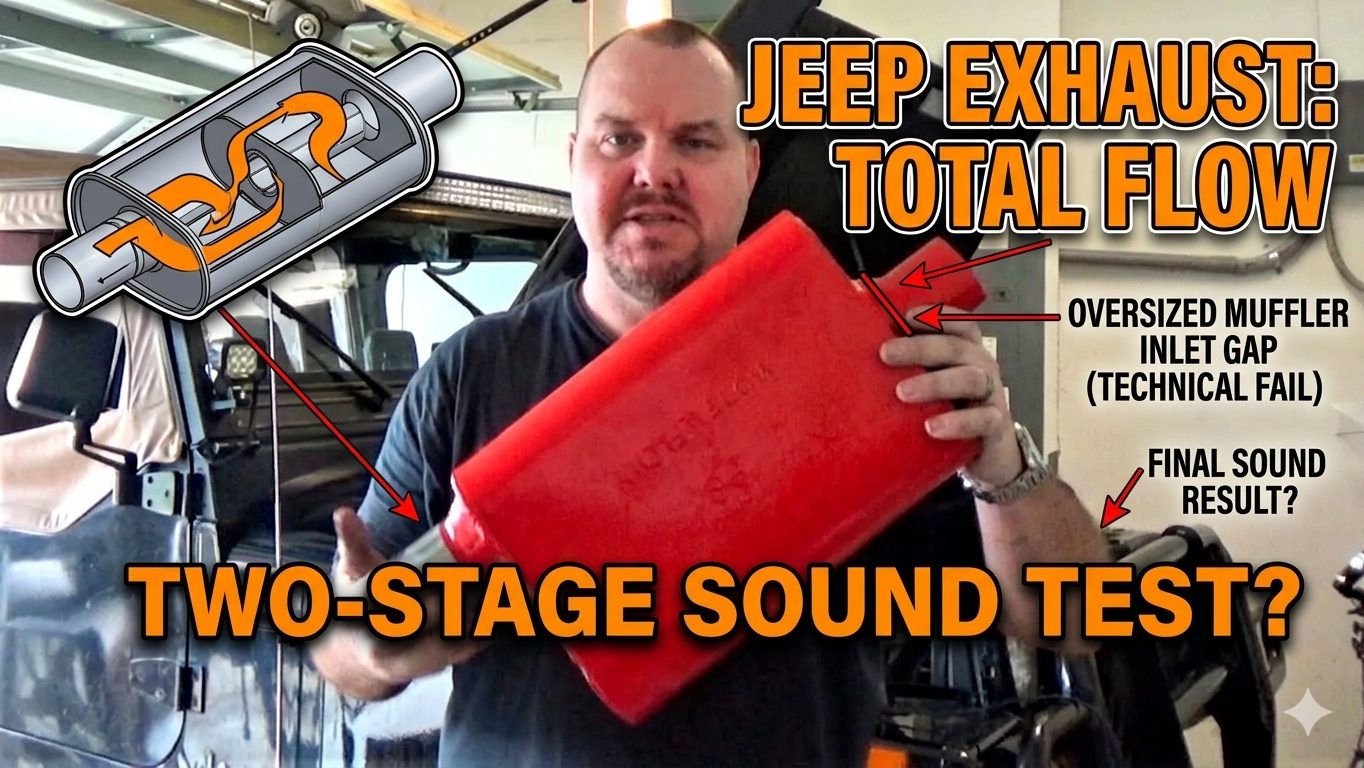
The Total Flow muffler was labeled as 2.25-inch, but the actual fittings were slightly oversized. This created a significant gap. If you’re doing this DIY, use the Speedwow Butt Joint Clamps to pull the metal together for a leak-free seal.
4. The Two-Stage Sound Result
Unlike a straight-through muffler, the two-stage design forces exhaust to turn back on itself, canceling out high-pitched rasp. For a 4-cylinder engine, it delivers a deeper, more refined growl without the “drone” of a cheap glasspack.
Logic & Outcomes: Is Total Flow Worth It?
While the fitting tolerances were a bit loose, the sound quality is a massive upgrade over stock. By doing this install yourself and using heavy-duty clamps, you save hundreds in shop labor while gaining a custom exhaust note that fits the trail rig persona.
FAQ: Technical Breakdown
Q: Why choose a two-stage muffler over a single-stage?
A: A single-stage is essentially a straight-through pipe with some packing—it’s loud. A two-stage muffler provides better sound dampening by rerouting the airflow, which is critical for 4-cylinder engines to avoid sounding “buzzy.”
Q: Did the Walker pipe fit the Jeep factory hangers?
A: Yes, the Walker (Wagner) tailpipe matched the chassis dimensions correctly, making the rear half of the install seamless.
Q: How do I fix the gap if the muffler inlet is too large?
A: Use an exhaust band clamp instead of a standard U-bolt. It provides more surface area to pull the metal together.
Q: Is this setup too loud for the highway?
A: No. The two-stage design keeps the decibels manageable at cruising speeds while still giving you a “good sound” when you’re on the gas.
Internal Siloing
- More Jeep Tech: See our full Jeep Build Series for more mechanical overrides.
- Ho Maid Chef® Kitchen: After a day under the Jeep, head over to Dining With Danielle for a meal that hits as hard as a new exhaust.