The restoration of the Bayliner Bowrider 175 has officially entered the most “uncomfortable” phase: preparing for fiberglass. Episode 11 is all about sanding, safety gear, and the reality of working in tight, hot spaces.
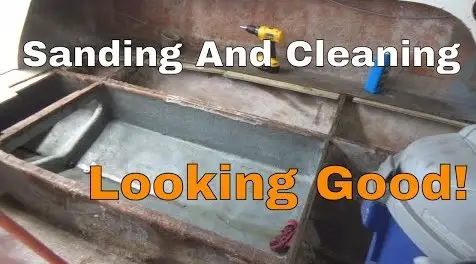
If you’ve ever worked with fiberglass, you know that the dust is a nightmare—it’s itchy, irritating, and gets everywhere. Here is the technical breakdown of how we prepared the hull for its new structural layers.
The Setup: PPE is Non-Negotiable
For all of you concerned about safety, I suited up for this one. Working with fiberglass requires a full barrier:
- White Paper Suit: To keep the fibers off my skin.
- Mask & Goggles: To protect the lungs and eyes from fine fiberglass dust.
- The “MOPP Level 4” Feel: Being a veteran, this suit reminded me of MOPP Level 4 training in the Army—it’s essentially a sweatbox. I was boiling in there, but it’s the only way to avoid the week-long itch.
The “Lava” and the Stringers
Our main focus for this sanding session was the front of the hull and the structural stringers.
- “Lava”: We’re sanding the bow area where the previous owner beached the boat. The fiberglass is worn so thin that light shines through, creating a red glow Danielle calls “lava.”
- The Stringers: I used a 5-inch DeWalt orbital sander to rough up all the stringer surfaces. You need a “mechanical bond” for the new resin and fiberglass to stick. If the surface is smooth, your repair will peel right off.
Dust Management
To keep the mess contained, I used a “dustless” sander and ran a shop vacuum continuously. Even with a good sander, you’re going to have some bypass, so having that vacuum right at the work area is critical to keep the air (relatively) clear inside the boat.
Inboard/Outboard Oil Change Realities
I also took a moment to change the oil on the Mercruiser 3.0. A quick tip for I/O boat owners: it is almost impossible to change the oil without getting at least a little bit into the bottom of the bilge. I’ve cleaned up the engine bay, but you always have to stay on top of those spills to keep your bilge pump from pumping oil into the water later.
The Result
I am sweating, itchy, and glad to be out of that suit. The stringers, the edges, and the “lava” area are all roughed up and ready for the next step: resin and fiberglass. This is where the boat starts becoming structurally sound again.
Watch the “MOPP suit” sanding session here: Boat Bilge, Preparing for Fiberglass EP #11
Tools Used:
These are all the tools I used while sanding. It was very hot while doing this part of the project, but I would not have done it without the protective gear. Fiberglass in bad for the lungs and will make you itch like crazy.
Disposable Protective Coverall: https://amzn.to/2EN3Ie1
Clear Anti-Fog Safety Goggles: https://amzn.to/2EH4rNF
Dual Cartridge Respirator: https://amzn.to/3lEGur3
Latex-Free Gloves: https://amzn.to/2yyaU86
Orbit Sander: https://amzn.to/2yzPs2B